Friday, February 27, 2026

Production: Storyboarding 1st Day

 Introduction/Filming (Scenes 1-2)

Now that I have learned about what storyboarding is and how to effectively storyboard, I am now ready to begin storyboarding with my group. We focused primarily on working on day one of production which consists of two scenes establishing tone and tension. The first scene takes place in the garage or what I recommended a office or room which is easier to film, but ultimately decided on the garage. These will all take place at night, including shots of Derek writing or planning with a bulleting board MCU. Then an OTS with a body bag and a medium shot of him exiting. Scene two will take  place in the kitchen specifically and will cover shots 5-7 including a tracking shot from his garage to the kitchen. Then a fridge POV shot which was my idea, during this a phone call with Lisa takes place and in the background behind a window The Judge can be seen. 


Research: Storyboarding


What is Storyboarding?

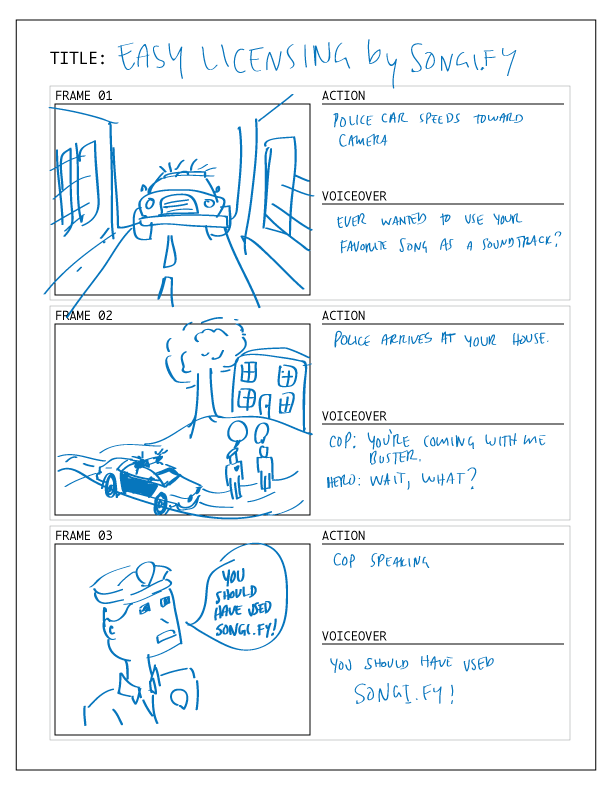
Storyboarding is what occurs before production begins, it is used in different films and media to have an idea of what may be to come for the filming. It allows the crew to have a visual representation of what scenes and shots are going to occur and in what order they will happen to plan film days by scenes. The actual storyboard is an order or series of drawings and images which convey key moments in each scene. This is all organized in specific order acting as a visual alternative to the script for those who don't see the vision of the director writer. It focuses on showing how the story or film would look on screen rather than a text describing it. Each frame includes many details regarding the camera angles, shot types, character positioning, and optional notes going over movement, dialogue,  or sound. This helps directors and filmmakers visually plan out a film's narrative to see how it will be presented.

What is a Storyboard [Theory, Examples and Mega Inspiration] | GM Blog

What Is A Storyboard & How Do You Create One? (With Video)

How to Storyboard

  • Break down and analyze the script into scenes
  • Figure out the most important shots which convey the plot
  • Draw simple panels representing each shot (stick figures are more than enough)
  • Label each panel with the type of shot (close ups, medium, long shots)
  • Organize panels to match the order of the film (continuity)
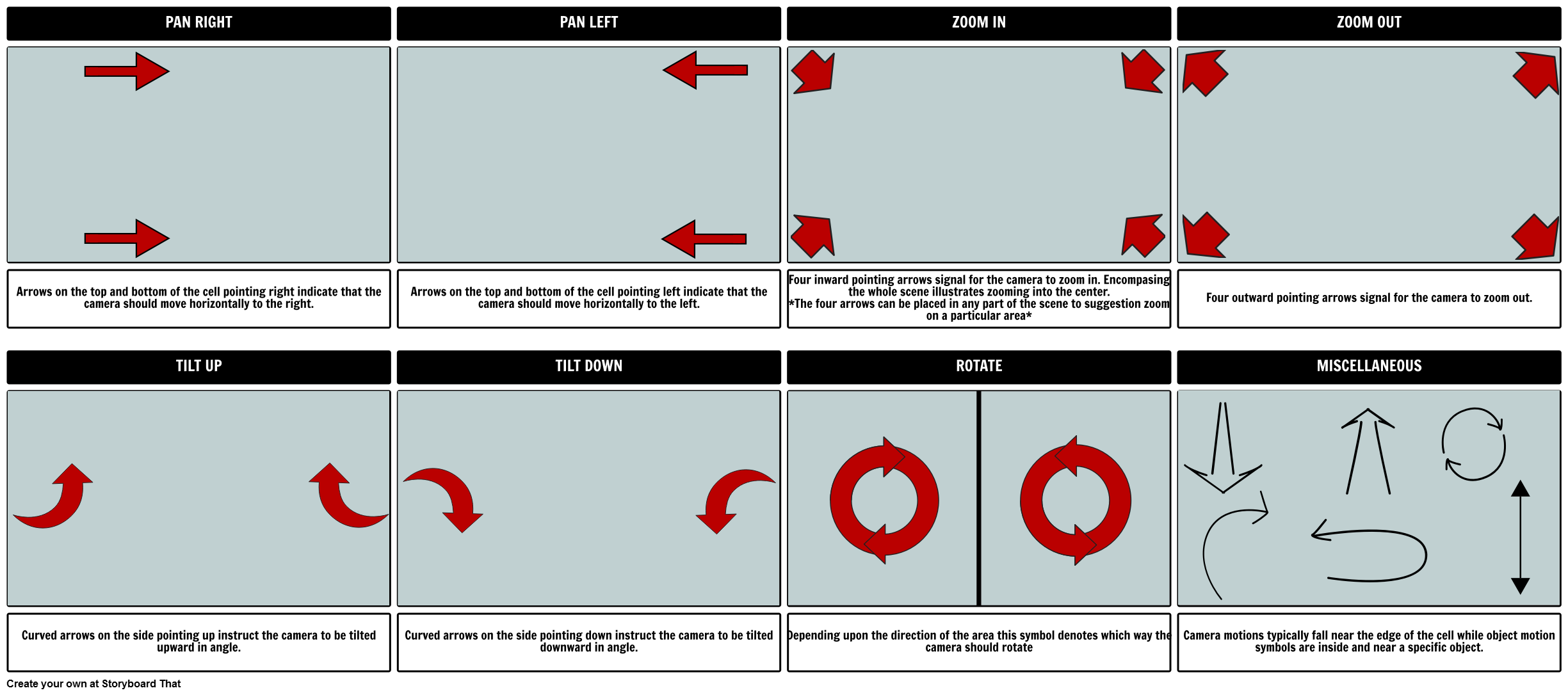
  • Add notes discussing camera movement for cinematographer (pan, tilt, zoom)
  • Include important sounds that convey specific mood (dialogue, sound effects, ambience)
  • Review and adjust to make sure everything is clear and realistic to film
Story board template Images - Free Download on Freepik

Storyboard Camera Shots: Plan Action with Storyboard That

https://cms-assets.tutsplus.com/uploads/users/109/posts/30962/image/06_01_Tut_Apr_2018_Storyboarding_by_misschatz.jpg

How is Storyboarding Helpful

In the end, storyboarding is genuinely helpful for crews because it essentially allows them to plan better, save time, and make production more efficient. By having a direct visual going over key shots and scenes, filmmakers are produce shots without having to put much effort into setting up which also reduces mistakes and delays. It also helps identify problems beforehand as some shots may not be possible during actual film day and the added anticipation of storyboarding allows them to see right through their mistakes and recorrect them. It also helps a lot with allowing the team to communicate much better, as everyone can see what the vision is supposed to look like.


Sources:

https://learn.toonboom.com/modules/intro-to-storyboarding/topic/the-importance-of-storyboarding

https://www.vyond.com/blog/what-is-a-storyboard-and-why-do-you-need-one/

https://www.skwigly.co.uk/storyboarding-tutorial-pt-1-the-dos-and-donts/

https://www.adobe.com/uk/creativecloud/animation/discover/animation-storyboarding.html

https://www.studiobinder.com/blog/what-is-a-storyboard/

https://www.lafilm.edu/blog/storyboarding-101/

Thursday, February 26, 2026

Production: Finishing Up the Script

 Before we begin filming our brief, we all knew the script wasn't ready on our standards and if it wasn't enough for us then we had to step up our game. After going back and taking a look at all of it, that most of the original ideas we had look really good in mind but later on be impossible to physically film. Like pulling a "body bag", overhead aerial shots, and new characters getting arrested. These scenes would enhance this film so much but in reality we wouldn't be able to pull it off even if we had the time. To solve this issue my group and I came up with new scenes where the body bag would be still, the aerial shot would then turn into a camera tilt, and the daughters arrest seen was now changed entirely to adjust for filming day. With everything in order the predicament was now solved and we could now see through with our film.


Production: Schedule Revamp

 My Situation

So, I had to go out of town this weekend with my father which led to the unfortunate turn of events for production. The whole reason I was needed was because I has the actual camera we were planning on using for the film. Since they needed the camera they were unable to continue any further production of the film until I returned. In the meantime, we all got together on call and came up with a solution. With the previous schedule it was originally made to leave us some extra leeway for any sort of emergency or turn of events such as this. Now that everything is shifted it is all perfectly fine as now all dates have been shifted for after the first week of march and everything after will be used for production.

New and Improved Schedule:


Reflection

In a way, it was ultimately a good thing, everybody in the group could get school work out of the way, and now we have more time to adjust the small things. This includes getting better props help portray our idea of the killer. Also we can now re examine the plot to make sure everything makes sense as in continuity in the storyline. Making sure each scene is in their corresponding setting also helps a lot. After, we plan on storyboarding what scenes we are filming next. This allows for a nice transition into filming. With all that in mind, we are in utmost ecstasy that we are going to begin filming soon which is a huge step with our film.

Tuesday, February 24, 2026

Planning: Film Location

 Now that we have our script, cast list, and storyboarding done. We now have to decide on the location to film since the deadline is coming up soon. My group discussed multiple eerie or creepy locations with unsettling vibes but ultimately we settled on my friends kitchen and house. We chose this location because the way its setup gives us multiple ways to build suspension through the glass doors from the kitchen. This spot also allows us to get in some more jump scares. We had to rule out multiple other ideas we had thought of such as another persons house which didn't fit our specified needs of the garage. Since it takes place in my friends house we had to overcome some issues such as where to film. The house we chose also has some limitations on what we can and can not do. While we thought of parks as well and how well suited they are for adaptability, we decided the house would be our best fit overall. In this sense we can also use multiple houses with similar layouts to combine the structure and house according to our needs.

Reece Reports:

First Location: Home/ Kitchen Interior

Images of the House-


After asking around, our group settled on a location for the third scene that we felt was a strong fit for what the script called for. The back area in particular has an unsettling quality to it, and with the blinds rolled up, our group believes it could produce a really effective jumpscare moment. This location was actually in mind when our group was writing the script, which made it feel like a natural choice. That said, there are two challenges we need to address. The back room is fairly cluttered, so some cleaning and rearranging will likely need to happen before filming can take place. The biggest concern for our group is timing. The scene is intended to take place at night, but we are not certain that all cast and crew would be comfortable filming on location after dark. If that becomes an issue, our group is prepared to use a day-for-night approach, adjusting the color grading and lighting in the post production to simulate a darker outside setting even if the scene is shot during the day.


Second Location: Home Living Area, Garage, & Exterior

No Images of Location Just Yet.


Our group does not currently have images of the location, but we are familiar with it having visited a couple of times. A small but great suggestion came from one of our group members, and after considering it and some cooperation, everyone agreed it was the right call. Compared to the previous location we were looking at, this one addresses two significant problems we ran into. The garage is spacious enough to actually film in, which the other location could not offer, and the living room provides both the space and the lighting that our script requires. One thing our group felt good about is the transition between the garage and kitchen scenes. Because the script does not call for a continuous shot connecting the two, the cut between clips should feel natural. The intention is for the audience to read it as one cohesive location rather than picking up on any kind of change in setting.

Reflection

With planning mostly behind us, our group is now shifting focus toward production. The next steps involve going through the logistics of the opening sequence and locking in how we want to approach everything on set. Once we come up with a solution, filming will begin, followed by editing to piece it all together. Depending on what comes up during production, there is a possibility we will need to dig deeper into certain filming techniques or editing processes, which may result in additional research along the way.


Planning: Our Storyboarding Process

Planning: Storyboarding The Concept

Our group built this concept around a simple but unsettling question: what happens when someone decides to take justice into their own hands? The killer we developed doesn't distinguish between the guilty and the innocent. Anyone who has ever stood trial for murder becomes a target, whether they were acquitted, wrongfully convicted, or actually committed the crime. Our group felt this was essential because it forces the audience to recognize that despite any twisted logic behind his actions, he is undeniably wrong.

Designing the Killer

Our group wanted every aspect of the killer's appearance to feel like a corrupted version of the legal system. We settled on a sharp black suit, an unsettling mask, and a peruke to reference the judicial tradition. His weapons, a gavel, a length of rope, and the scales of justice, were all pulled from courtroom imagery. The detail our group was most committed to was the briefcase. After every kill, he opens it and writes the word "guilty" inside, serving as his signature throughout the film.


Visual Storytelling in the Opening

Our group designed the opening to communicate as much as possible without dialogue. The garage scene establishes the serial killer through his environment alone, tools, a body bag, news clippings, all visible within the first thirty seconds. A wide shot captures the moment the vigilante steps from the shadows, making the space feel large and isolating. For the main character's introduction, our group chose a radio broadcast to deliver backstory naturally, while visual details like an ankle monitor or court documents quietly establish his situation.


Production Planning

Our group focused the production design around atmosphere. The garage would be heavily shadowed with minimal light sources, forcing the audience to feel the threat before they see it. For the kill, we referenced the practical effects in the Terrifier films as a starting point but planned to scale the intensity back considerably to match our film's tone. Sound design was equally deliberate. Near silence throughout the garage sequence, broken only at the moment of the kill when the music hits hard and carries straight into the title card.

What Would Come Next

If we were to go into a full production, the story would follow a wrongfully convicted man or woman out on bail and his defense attorney, whose own father died in prison for a crime he didn't commit. Each previous kill was planned to represent a different failure of the justice system, leaving the audience questioning whether they understand the killer's logic even as they recognize it as wrong.

What We Learned

This process reinforced for our group that every filmmaking decision needs a clear purpose behind it. The garage scene works because it surprises the audience while immediately establishing tone, and connecting it to the main character proves the concept can sustain a full film. Our goal was always to deliver a genuine slasher experience while leaving the audience with real questions about guilt, justice, and whether any system built by humans can ever truly get it right.


Planning: Cast List

 Intro

Now since we have the script done which is just missing some re-polishing. My group has finally gotten a cast list set up for who is going play our characters. Within the next few weeks we are already scheduled to be filming and the next step before production would be to know who's going to be in it. This helps us slowly transition into into production easily and this way we can let our actors know what and who they are going to be. When we began to search for our actors, we had to know who was going to play the main protagonist and the antagonist, specifically Derek and Lisa. For Derek we wanted a male person who had a big frame and nice physique. As for Lisa we needed someone with a good vibe and energy to play her specifically a female that works well with other actors. Together these two can work in harmony hopefully not giving us any issues or delay of any sorts.

Actor playing Derek- Joey Artanis


Actor playing Lisa- Angelina Lasalle


Next Steps

Now that we have our cast of actors, we can now get the measurements and sizes of our costumes and makeup. This is delayed now for a while since we were waiting on specific sizes and measurements so everything could be full proof. My group and I realized that we will also have to soon enough familiarize them with their roles, script lines, and what they should be trying to convey. We also thought about making a sheet which goes over specific character details for our actors to use and understand their role more thoroughly. For most our characters we expect them to have very subtle clothing. The time period is based around 2010-2020, so we also expect them to dress in that specific way. Derek will have more mature clothes since he is the older character while Lisa will wear more young teen or teen adult outfits reflecting the trends of the time.

Planning: Props and Scene Ideas

 Intro

In this opening, My group and I are going to split the main scenes into 4 sections that transition smoothly. Each scene will use specific props to convey the story and let people perceive visual ideas. I want the people watching to understand what is going to occur without really hearing any narration or dialogue. I want to use the props in a sense that they will create the suspense and build the story up for me especially the conflict.

Scene 1: Garage

After discussing with my group we all agreed that the first scene is going to consist of a throwaway kill character inside of a house. He will be found to be writing some sort of blueprint with a board nearby of his potential targets and with some already crossed out, this is done to show that he has some sort of intention with other people and that he has already killed multiple people along with the fact that he might be planning something big. Next we want to add weapons a potential weapon such as a knife, or maybe fake needles. Behind him as well, we can also make a fake body bag out of trash bags zip tied together stuffed with moving toys and pillows to give the sense that there is already a victim in his basement. For the body bag we could also potentially edit in sounds of someone with muffled stressed out screams. Eventually he goes and gets up to grab a glass of water. In between, hidden in the background we could have the real killer be stalking him within the presense of his own home. This helps build suspense and throws almost like a giant curveball at the plot. 


Scene 2: Around his house

The following scene of the film will need a setting where there is a kitchen facing some sort of glass door to the outside where you can see nothing but darkness. When the throw away kill is going for a glass of water to clear his mind, we thought of using noises to imply there's someone or something watching him. When he looks to investigate but sees nothing but himself he would just turn around, that's when the real killer has already infiltrated and is already in frame inside the house. After being spooked and paranoid the throw away is going to just head back to his garage.


Scene 3: Outside of the home

This is where the kill happens. We want to use a long shot with one strong light source and heavy shadows around the house. The garage door opens slowly as the serial killer walks toward his car. The real masked killer emerges from the shadows wearing a black suit with a hood. The mask is partially hidden by the hood, making it more intimidating. Instead of a knife, the kill will be done with a gavel to connect to the court system theme. After the kill, the newly introduced main killer opens a case file and writes “guilty” on the paper. That becomes his signature.


Scene 4: Intro to main character

After the incident during the night, We cut to the main character which would most likely be a girl. She is seen in her everyday life. Most importantly she will have an ankle monitor, revealing she has previously already been convicted of some sort of crime. There will be news on the radio talking about a masked killer. Where ever the main character is she will have court documents showing some sort of heavy crime. Which foreshadows that she is a potential victim. The main killer could also have a police radio in someway to show that he listens to their radio to know who commits what crimes in the moment. These props all go hand in hand to work together and show slasher conventions while building the justice of the film. The audience should understand what we want to convey including, the tone, threat, and the suspense for what is occurring throughout the film opening.


Research: What Are Commonly Used Props in Settings?

 What A Prop Is

 The actual definition of a prop in a film is any object an actor can feel, see or interacts with generally. These objects can range anywhere from a book to a cup of coffee, they can also be much bigger such as a piece of furniture like a table or a car. Props make everything feel more real and adds to the immersion.

Common Types of Props in Horror

Weapons

In slasher horrors, it is typically known to always see a weapon. These weapons are what help people identify the killer and builds suspense. For example in Scream IV, Ghostface's signature weapon is a simple knife. Since it so simple it adds a sort of realistic feel to it which tends to make audiences more uncomfortable and vulnerable. Also in Halloween Ends, Michael Myers´ kitchen knife is what he is known for especially his character. Slashers focus on using weapons that would be realistic to a scenario to make people feel disturbed and uncomfortable.


Masks/Identity

Masks are another very important prop in slashers. They help to conceal the identity of the killer and make them feel more mysterious and sadistic since it makes people assume the killer is enjoying it. In The Black Phone, the Grabber´s mask changes expressions throughout the film, adding a level of psychological fear. In Thanksgiving, the mask of the pilgrim gives off an emotionless, cold, sinister look. The mask is another symbol for many popular characters.


Technology/Tension

A lot of modern slashers use technology to create suspense in different ways. These props consist of:
  • Phones that receive threats from calls
  • Broken or no signal for cell phones
  • Security cameras
  • Messages or devices use to track victims
  • Social media posts leaking location


In Scream VI, they use phone calls and tracking applications to increase tension and suspense throughout the movie. The tech in these Slasher films usually fail when most needed, which leaves the characters alone and isolated.

Sources:

Thursday, February 19, 2026

Planning: Title

 Intro

    Since the storyboard has been completed, my group and I have decided to work on the title and movie poster for our short film. We planned that we needed to come choose specific colors, typography, and poster images. In addition I have to know when and in what way the title will appear.

Within my group we all began thinking and coming up with ideas for the kind of themes we are aiming for.  We concluded that the title should convene with the central theme or main idea of the film opening The way we came up with this is how the killer uses the judicial system we have today as a way of deciding the fate of others, looking at murder crimes committed of the victims the killer murders. In the end we came up with, "A Brutal Sentencing". Since the killer kills according to finding his victims guilty or labeling them that way, he uses it in a way to "judge" or "sentence" somebody which we found directly correlates to the title of the movie.


The best way we to see what the title and all our conventions would look like in the actual movie, we decided to make a poster together, for the typography we chose "DM Serif Display" we chose this because back in my typography research sharp fonts such as this one are used a lot in horror films. The deep red color trys to convey a feeling of blood or injury, which is huge in slasher horrors. All of this together goes hand in hand with each other to portray the suspense and mystery we are looking for.

  • Title Placement: We are slotting the main movie title right after the killer is taken out, just before the daughter’s arrest scene.

  • Beginning Credits: ll cast and crew(cast list) names will appear during the opening "blueprint" scene, using a specific montage and  suspenseful background music to set the tone.

  • Goals: Now that we have a visual roadmap for the credits, my group and I need to focus on finalizing our rough draft of the script to ensure the timing of these elements works on paper to form our opening. Another goal is to finish our cast list to ensure we have actors to fit our stereotypes that are known in horror

  • Monday, February 16, 2026

    Planning: Production Timeline

    Intro

    After discussing with my group, we thought that we should break down and structure the production timeline so we can have an idea of how everything going to occur when filming and if anybody needs to reschedule we can have it ready. We will also use this to have a general chronological order for filming.


    Production Timeline (agreed upon by group)

    Beginning - End


    The production is planned to begin on Feb 22nd and should finish by March 14th. This will give us more than sufficient time. The timeline also works in our favor by being able to give is extra time to reschedule filming in between if anything comes up for any group members. In the end we agreed on a week extra may be needed in the end.

    In Between/Room for Changes

    The shooting schedule we settled on includes three separate days. February 27th is a Friday. Then we have the 28th and March 1st, both Saturdays. We chose these because everyone's actually free and can commit to being there. Obviously if emergencies pop up or conflicts arise, the schedule might need adjusting.

    One major factor we're accounting for is filming at night. Everything's being shot in the dark which creates challenges with lighting and visibility that we'll need to work around. Before any of that happens though, my group needs all the props ready. The deadline for having everything ordered and collected is February 22nd. That leaves about a week to get it done. 

    Editing Days

    Post production in Premiere Pro happens right after filming wraps. The focus during March's first week is piecing together all the footage. We'll be syncing audio and making sure transitions between clips work smoothly.

    The second week tackles different elements. Visual effects get added then. Color grading happens to achieve that slasher horror aesthetic we want. Opening titles and closing credits also get created during this period.

    Reflection

    My group now has a clear roadmap to follow instead of loose plans. Mapping out this timeline organized everything for the film opening and gave structure to what needs to happen when.

    Planning: 1st Script Draft

    Time Management & Structure

    When my group started working on our first full script draft, one of the biggest things we had to worry about was timing. We only have two minutes. We had to really think about how long each scene would actually take. In the beginning we had way more stuff planned than what would actually fit. We talked about adding a scene where a guy walks to his car and turns on the radio. You'd hear them talking about the case on the news or something. We thought it sounded cool but it would've slowed everything down. The pacing would've suffered and it probably would've made us go over the time limit. After talking about it we decided that keeping things shorter would actually make it better.

    Cutting that scene made us focus on what actually mattered. Tension, mystery, and ending with something that makes people want to keep watching. This goes back to what I found when researching horror scripts. Pacing and staying focused is more important than just adding extra stuff.


    Main Character

    Another big thing we had to figure out was how to make this feel like the start of a real movie. Not just a short horror scene. In our earlier ideas Derek was gonna be the main focus. But we decided to kill him in the opening. We realized we needed someone else to carry the story forward. That's when we started focusing more on Lisa. She's his daughter. We show her getting blamed for crimes she didn't do anything with. The false accusation becomes the driving force. This makes her the actual main character going forward. It also pushes our bigger theme about how messed up the justice system can be.

    How My Research Applies

    In this first draft we made sure to use the stuff I learned from researching horror writing. The opening scene in the garage does a few key things:

    • Sets the tone with dark lighting and atmosphere
    • Shows the blueprint with crossed-out victims
    • Has the body bag moving which creates immediate tension

    We also didn't give away too much information. We wanted to build suspense. At first Derek looks like he's the main villain but then this masked judge guy shows up and kills him. We came up with this twist when we were brainstorming. It adds a lot of mystery and subverts expectations.

    We don't explain everything. We let questions build up. Who's the masked judge? Why's he going after Derek? What does "guilty" actually mean in this context? There's stuff like the noise in the bushes and the pause before the final attack. We planned those out to stretch the tension.


    Ideas We Never Implemented

    We came up with a bunch of ideas that didn't make it into the draft. Besides the radio scene we also talked about adding flashbacks. They would show Derek doing crimes before. But we realized showing too much backstory would kill the mystery. We even talked about showing the killer's face at the end. Keeping him masked makes it stronger though. It leaves room for the story to keep going.


    Next Step

    Now that this first draft is done we need to go back and fix up some details. Here's what we're planning:

    • Update our prop list since we changed scenes around
    • Lock down filming locations (garage, kitchen, driveway)
    • Plan out actor schedules
    • Try to shoot everything in order for consistency


    Brainstorming

    Working on this draft as a group made it way better. Everyone added ideas and different perspectives. Symbolic stuff like the judge costume and mallet. Pacing choices like the fake scare in the bushes. Bigger changes like making Lisa more important. We challenged each other and had to justify our choices.

    This first draft does what we wanted when we were brainstorming. It sets up the horror right away. Builds suspense through withholding information. Has a good twist that changes the audience's understanding. Ends with injustice that sets up the bigger story. We might still change some stuff during revisions but this draft shows both the research I did and how well we worked together.

    Research: What Makes A Good Script?

     Intro

    In this research post, I looked into what makes a horror script work well and be effective, especially in modern slasher films from the last five years or so. By looking at and analyzing recent examples like Scream from 2022, X from 2022, and Sick from 2022, I focused on how writers put together and structure strong openings that immediately create tension right away. Since my own project is a two-minute slasher opening that I'm making, understanding how these films introduce fear and scares, develop mystery and suspense, and control pacing and timing is really important for shaping and writing my script.


    Establishing Genre and Disruption

    One of the first things I noticed and picked up on in modern slashers is how clearly and obviously they establish genre from the beginning and start. The setting and location, tone and mood, and dialogue and what people say immediately signal and show that something is wrong or off. In Scream from 2022, the opening phone call quickly creates unease and discomfort before the violence even begins or starts happening. There is also a clear pattern and trend where a normal situation is shown first and then suddenly disrupted and interrupted by danger and threat. This contrast and difference makes the violent moment more intense and shocking because it interrupts something familiar that we recognize. For my own script that I'm writing, I need to make sure the opening clearly feels like horror from the start and beginning while still showing a calm moment before things go wrong and bad.

    • Establish genre clearly in the first scene
    • Begin with a normal situation before introducing violence

    Building Suspense Through Limited Information

    Another key idea and important thing I learned is that suspense depends on and relies on limited information and not knowing everything. In films like X from 2022, the script does not immediately reveal or show the killer's full motives or reasons or identity and who they are. Instead, tension builds and increases through small, uncomfortable moments that make you uneasy. The audience senses and feels danger but does not fully understand it yet or know what's happening. This makes them more engaged and interested because they are trying to figure things out and solve the mystery. Giving too much information too early removes and eliminates mystery. In my project that I'm working on, I plan to hide the killer's face and identity and avoid explaining everything in the opening scene.

    • Limit information about the killer at the start
    • Build suspense gradually before the first major scare
    • Raise questions that make the audience curious

    Character Setup and Dialogue

    Modern slasher films also show and demonstrate that characters should feel real and believable, even in a short amount of time. In Sick from 2022, the characters are introduced and shown through their behavior and how they act and reactions instead of long explanations that go on. Their personalities are shown and revealed through small interactions and moments, which makes the danger feel more personal and meaningful later on. I learned that dialogue in horror openings should be short and brief and natural sounding. If characters talk too much and keep going, it reduces and lowers tension. Simple actions and movements, like walking through a dark space or area or reacting to a strange noise or sound, can say more and communicate better than long conversations with dialogue.

    • Keep dialogue short and realistic
    • Show character personality through actions

    Pacing, Silence, and Foreshadowing

    Pacing and timing is one of the most important parts and crucial elements of horror writing. Good scripts use pauses and breaks and silence and quiet to build tension and suspense. Small sounds, like footsteps walking or doors opening and closing, become more powerful and effective when there is quiet around them and silence. In recent slasher films from the past few years, the moment before the scare happens is often stretched out and extended, making the audience uncomfortable and anxious. I also noticed and observed that subtle foreshadowing and hints is common and frequent. Small clues early on can hint at and suggest danger without being obvious or too clear. These details make the story feel planned and thought out and intentional.

    • Use silence and pauses to increase tension
    • Add subtle foreshadowing
    • End the opening with a strong hook

    Themes Beneath the Horror

    Finally and lastly, many modern horror films include and have deeper ideas and concepts beneath the violence and killing. While they are still slasher films at their core, they often reflect and show themes like fear and anxiety, mistrust and paranoia, or social issues in society. This makes the story feel more meaningful and important. Instead of being just about a killer chasing victims and hunting them, the horror connects to something larger and bigger. In my own project that I'm creating, I want to include and add themes about justice and fairness under the slasher storyline and plot. This gives the opening more purpose and reason and makes it more interesting and engaging for the audience watching.

    • Include a deeper theme beneath the horror

    Reflection

    From this research that I did, I learned that writing a strong horror script is not about constant jump scares that keep happening or random violence that has no meaning. It is about control and intention. Suspense works best and is most effective when information is limited and restricted, pacing is intentional and planned, and characters feel believable and real. I also realized and understood that horror openings need structure and organization. They should begin with normality and regular life, slowly increase tension gradually, and end with a moment that leaves the audience wanting more and curious. Most importantly and crucially, I learned that the best horror scripts combine and mix fear with meaning and purpose. By applying and using these ideas to my own project, I can create an opening that feels planned and organized, tense and suspenseful, and effective rather than rushed or predictable and generic.

    Sources:

    https://www.thewrap.com/best-slasher-movies-of-the-2020s-so-far

    https://en.wikipedia.org/wiki/Sick_%282022_film%29

    https://www.them.us/story/scream-vi-movie-review-jasmin-savoy-brown-jenna-ortega

    https://assets.scriptslug.com/live/pdf/scripts/scream-2022.pdf?v=1729114985 (scream script)

    Creative Critical Reflection

     Introduction It has been such a long journey to get here, I'm so grateful for all these new learning opportunities that I have had. It ...